Coastal Communities in Yemen in the Absence of Protection Mechanisms The Phenomenon of Fishermen Disappearance in Yemen

Coastal Communities in Yemen in the Absence of Protection Mechanisms The Phenomenon of Fishermen Disappearance in Yemen
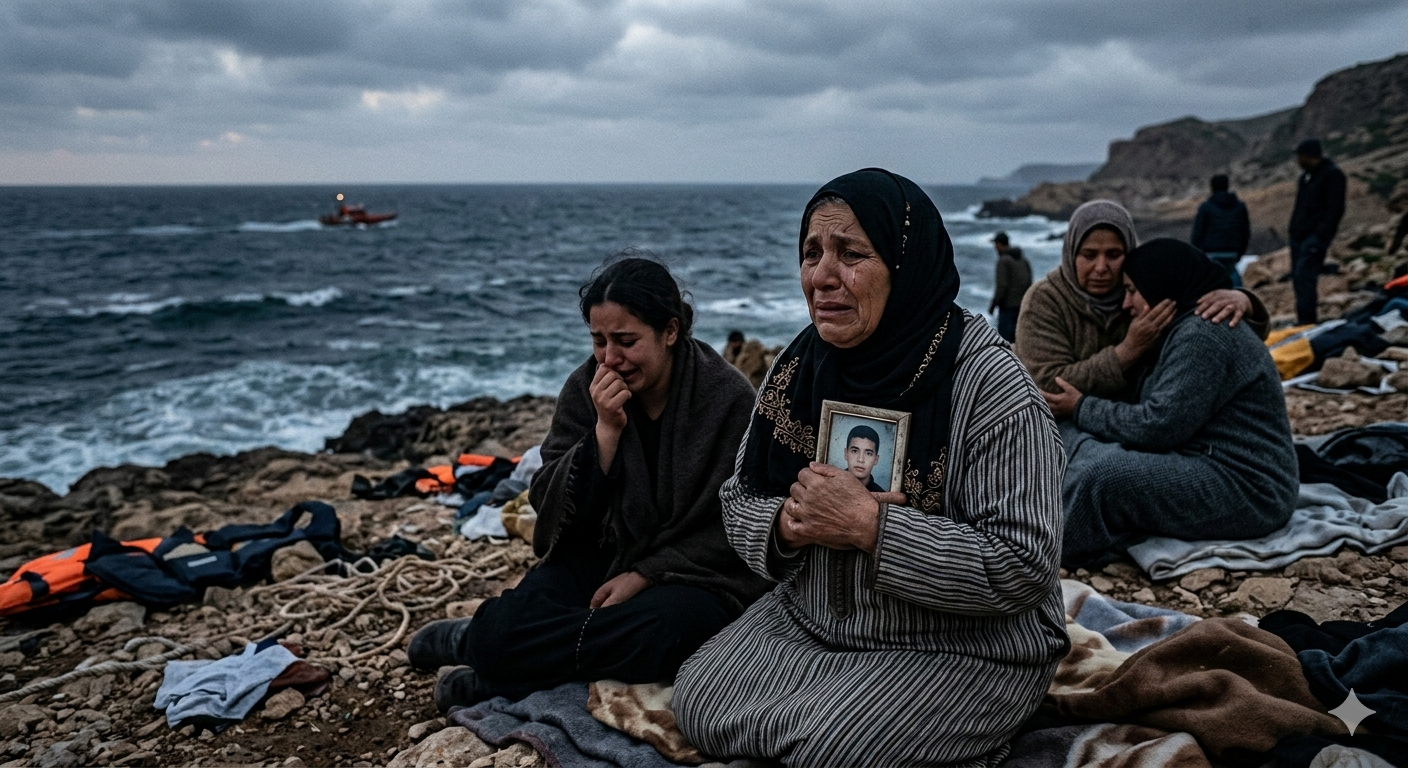
Thursday, 4:00 AM. Ahmed and five of his fellow fishermen leave their home in Al-Buraiqa District, Aden Governorate, heading toward the sea as they always do, hoping to start their day early and catch whatever fish God has destined for them. They go out at dawn and return in the evening—this is what fishermen in Aden and their families are accustomed to. But on this day, they were late returning. Their families waited for a long time. The clock struck nine, yet they had not returned. Their families went out searching for them. Fellow fishermen headed to the sea to look for them, but they could not find them. Six fishermen disappeared in the open sea and have not returned to this day, and their families are still waiting to hear any news about them. The fishermen continued searching for days and weeks without success, using whatever limited resources were available to them. The fishermen said that the sea was rough that day, and the winds were strong. It is most likely that Ahmed and his friends drowned amid these stormy conditions. Layla, the sister of one of the fishermen, says: “They are used to going out to fish… it’s not the first time. They leave at dawn and come back late at night… but this time they didn’t return… and we found no trace of them.” The suffering of the families did not stop at losing their sons and breadwinners at sea without knowing anything about their fate or whereabouts—whether they are alive, or even having the chance to see them one last time and give them a proper burial if they had drowned. Only God knows what happened to them, and only God knows what their mothers and wives are going through as they live with grief and sorrow. The families continued searching for the fate of their loved ones. During their search, they received a lot of conflicting information. Some would give them hope, telling them their loved ones were still alive and asking for money to help find them. But this hope would vanish as soon as the person received the money. Then another person would come, make the same promises, and take more money under the pretext of searching and finding their loved ones—leaving the families without their sons, without money, and without hope. This story is not just a rare or isolated incident; it is a recurring tragedy experienced by fishermen continuously along Yemen’s coastline. It reflects the fragility of the institutions concerned and the absence of support and care for one of the most important segments of society—one that forms the backbone of the economy, yet is also the most vulnerable and marginalized. The phenomenon of fishermen disappearing in open waters has been recurring in Yemen for decades. Despite its severity and danger, it has not been adequately addressed. Families in coastal communities continue to suffer the pain of loss from time to time. This issue is not only about the disappearance of individuals; it is a problem that affects the entire fisheries supply chain in Yemen, represented by weak protection and care for fishermen—the first link in a long and vital supply chain extending from the sea to international markets. Fishing has become a dangerous venture undertaken by fishermen who go out every morning without being certain they will return safely. Yet they go anyway, driven by poverty and hardship that leave them with no other choice. The disappearance of fishermen has become a widespread phenomenon along Yemen’s coastline, which stretches for 2,500 kilometers along the Red Sea and the Arabian Sea. Similar incidents have been recorded in Al-Hudaydah, Al-Mokha, Al-Mukalla, as well as the coasts of Abyan and Al-Mahra, reflecting increasing risks and a significant failure by coast guard forces and relevant authorities to provide protection for fishermen in these areas. Yemen’s coasts tell repeated stories of loss—boats that went out and never returned, fishermen betrayed by the sea and carried away by its currents to unknown places, especially amid climate changes and sudden seasonal fluctuations that exceed the calculations and precautions of simple fishermen. The impact of climate change on coastal communities in Yemen has increased, including sudden marine storms, unstable winds and sea currents, unexpected high waves, and shifting fishing seasons. Fishermen face all of this with extremely limited and often primitive resources, and without early warning systems or adequate safety equipment and tools. Institutional Neglect and Difficulty Accessing Protection In addition to natural risks, coastal communities face a chronic issue related to weak maritime governance and the absence of clear policies to protect fishermen. There is no integrated early warning system specifically designed for them, no clear mechanism to compensate families of the missing, and no sustainable psychological or economic support. The incident transforms from a natural hazard into compounded injustice, where climate vulnerability intersects with policy fragility, leaving fishermen trapped between the sea and neglect. When a Fisherman Disappears… Society Is Disrupted When a fisherman disappears, the family loses its primary breadwinner. It enters a cycle of poverty, food security declines, and access to education and healthcare weakens. With the repetition of such incidents, the resilience of coastal communities erodes economically and socially. The resilience of coastal communities is not only measured by their ability to withstand storms, but also by their ability to protect their fundamental livelihoods. If fishing is the backbone of these communities, then protecting fishermen represents the first step in building this resilience. Towards a Resilience- and Justice-Based Approach Addressing this issue requires an integrated vision that includes: · Providing accurate and timely weather warnings for fishermen · Strengthening maritime search and rescue capacities · Equipping fishermen with safety gear and communication devices at subsidized prices · Establishing support and compensation mechanisms for families of the missing · Involving coastal communities in designing policies related to the sea and fishing Linking these efforts to climate justice concepts also opens the door to directing climate finance toward supporting coastal livelihoods, rather than limiting it to narrow technical interventions. Conclusion The Al-Khisa incident is not merely a story of disappearance at sea; it is an indicator of structural fragility affecting fisheries supply chains and the resilience of coastal communities. Any discussion about resilience or climate justice will remain incomplete unless it begins with protecting the fisherman himself. When a fisherman goes out and does not return, the sea does not only lose a man… society loses part of its ability to survive.
Discussion (0)

Be the first to comment!

Please log in to post a comment or reply.